| News Details |
| Sakeena Itoo calls for result-oriented, district-level action plan to combat Drug Abuse | | Addresses National Social Justice Summit ‘Samaveshi Niti Sankalp’ at New Delhi | 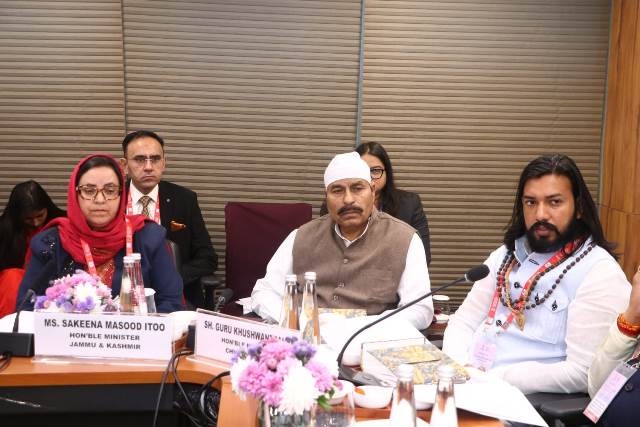
Jammu, November 20 (Scoop News)-Minister for Health & Medical Education and Social Welfare, Sakeena Itoo, has called for transforming the fight against drug abuse from a largely awareness-driven campaign into a comprehensive, measurable and outcome-oriented national mission, emphasising the need for coordinated action at the district, institutional and individual levels to effectively tackle the growing menace of substance abuse.
The Minister said this while addressing the second day of National Social Justice Summit ‘Samaveshi Niti Sankalp’ at Sushma Swaraj Bhawan here today.
While putting forth a practical framework for strengthening the national campaign against drug abuse, the Minister advocated an integrated model based on the principles of “One District, One Action Plan; One School, One Prevention Programme; One Patient, One Recovery Plan; and One Year of Follow-up”.
She stressed that the proposed framework could be adopted by every district across the country to ensure effective prevention, early identification, timely medical intervention, sustained rehabilitation and long-term recovery of individuals affected by substance abuse.
Elaborating on the proposed approach, Sakeena Itoo said that every district must formulate a dedicated action plan after identifying vulnerable areas and high-risk groups, with close coordination among the Health, Education and Police Departments to ensure timely intervention and effective implementation of preventive measures.
She further emphasised that schools and colleges must emerge as important centres of prevention, with trained nodal teachers entrusted with the responsibility of educating students about the harmful consequences of drug abuse, identifying early warning signs and facilitating confidential counselling and professional support wherever required.
Highlighting the need to place individuals at the centre of the rehabilitation process, the Minister said that every person struggling with addiction must be provided an individualised recovery plan rather than limiting the intervention to admission in a de-addiction facility.
“Sending an individual to a de-addiction centre cannot be considered the end of our responsibility. Recovery is a continuous process which requires medical treatment, psychological counselling, family support, vocational training and opportunities for meaningful employment. We must ensure that every person who seeks help gets a genuine opportunity to rebuild his or her life,” she said.
Citing the example of a young person identified with substance abuse in Kulgam, the Minister said the intervention must extend beyond medical treatment to include family involvement, counselling, skill development and livelihood support, enabling the individual to reintegrate into society with dignity and confidence.
She also underscored the importance of a structured one-year post-treatment follow-up mechanism, under which a designated counsellor or health worker would maintain regular contact with the recovered individual to monitor progress, provide emotional support and minimise the chances of relapse.
“Treatment must not end with discharge from a facility. The real test of our efforts lies in ensuring that the individual remains connected to the support system, regains confidence and does not return to substance abuse. A structured follow-up mechanism is essential to make recovery sustainable,” she maintained.
Calling for a strong enforcement mechanism alongside preventive and rehabilitative interventions, the Minister said drug trafficking networks must be dismantled through coordinated, intelligence-led action by law enforcement agencies, with strict measures against those involved in drug peddling and distribution.
She emphasised that the approach towards the drug menace must be guided by compassion for victims, sensitivity towards affected families and zero tolerance towards drug traffickers and peddlers.
“Our approach must be compassionate towards the victim, supportive of the family and uncompromising towards the drug peddler. Addiction should be addressed as a serious health and social challenge, while those destroying the future of our youth through drug trafficking must face stringent action under law,” she said.
The Minister stressed that the success of the national campaign against drugs should be assessed through tangible outcomes rather than being confined to the number of awareness rallies, seminars and other outreach activities organised.
“We must move beyond counting awareness programmes and start measuring the lives recovered, families restored and young people brought back into productive society. Every successful recovery is a victory for an individual, a family and the entire community,” she observed.
Reaffirming Jammu and Kashmir’s commitment to the national campaign, Sakeena Itoo said that every district must be made accountable for its action plan, every educational institution should become a centre of prevention and every recovered individual should be supported as a symbol of hope and successful rehabilitation.
She expressed confidence that a coordinated, people-centric and sustained approach, involving government departments, educational institutions, healthcare professionals, families and civil society, would significantly strengthen the collective resolve to eliminate the drug menace.
“Let us make Nasha Mukt Bharat not merely a government campaign but a people’s movement and a sustained national mission. Our ultimate objective must be to save lives, protect the future of our youth and restore hope in every family affected by this menace,” the Minister said.
The Minister also spoke on Disability and Scholarship related themes at the Summit.
On the inaugural day of the summit, Minister Sakeena Itoo highlighted the geographical, infrastructural and administrative challenges faced by students residing in remote and far-flung areas of Jammu and Kashmir
The summit, held on November 18 and 19, was organised to strengthen Centre-State coordination and cooperation for effective implementation of social justice and empowerment initiatives in line with the vision of Viksit Bharat@2047.
During the thematic session on ‘One Nation, One Scholarship Portal – Accessible Scholarships, Empowered Students’, the Minister drew attention to the difficulties confronting students in remote and hilly areas of Jammu and Kashmir, particularly Basholi, Kishtwar, Reasi, Doda, Tanghdhar, Machil, Keran, Gurez, Uri and other areas where limited digital connectivity and challenging geographical conditions often impede access to various educational and welfare schemes.
Informing the summit about the initiatives being undertaken by Jammu and Kashmir, Sakeena Itoo highlighted that the Social Welfare Department in Jammu and Kashmir would issue a comprehensive verification calendar well in advance of 2027 to streamline the verification process, facilitate timely processing of applications and ensure the efficient delivery of benefits to eligible beneficiaries.
... |
| |
|
|
Share this Story |
|
|
|
|
|
|
|
| |
|
|
| |
|
|